
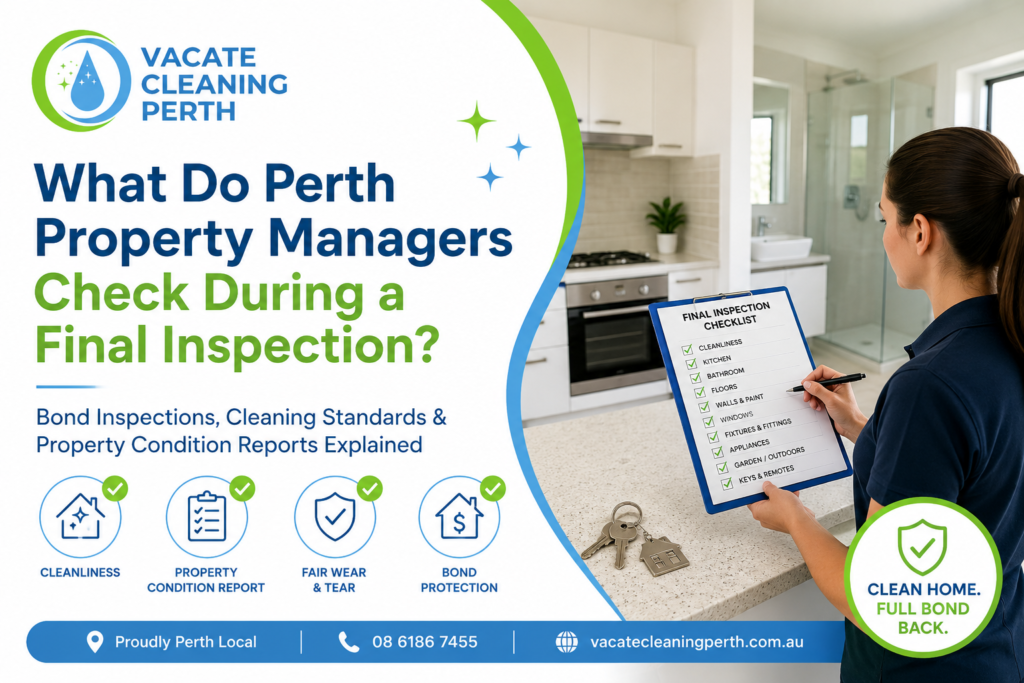
Moving out of a rental property can feel stressful, especially when the final inspection is coming up. For tenants, the main concern is usually the bond. For landlords, the goal is to make sure the property is returned in good condition and ready for the next renter.
In Perth, WA, a final inspection is not just a quick walk-through. A property manager checks the rental against the original Property Condition Report, also known as the PCR. This report helps show what the property looked like at the start of the tenancy and what condition it is in at the end. In Western Australia, the landlord or agent must complete a final property check when the tenant moves out and provide a copy of the final PCR within 14 days of moving out.
So, what exactly do Perth property managers check during a final inspection? Let’s break it down in a simple way.
What Is a Final Inspection?
A final inspection is the last inspection carried out after a tenant has moved out and removed their belongings. The property manager checks whether the home has been left clean, empty, and in a similar condition to when the tenant moved in, allowing for fair wear and tear.
Consumer Protection WA says tenants should remove their belongings, leave the home in a similar condition to the start of the tenancy, and repair or pay for damage beyond fair wear and tear.
The property manager usually uses the original PCR, entry photos, lease notes, invoices, and the current condition of the property to make a fair decision.
1. General Cleanliness of the Property
One of the first things a property manager checks is overall cleanliness. The home should be empty and cleaned properly before the inspection.
This includes:
- Floors vacuumed and mopped
- Skirting boards wiped
- Walls cleaned of marks where possible
- Cobwebs removed
- Cupboards and drawers emptied
- Light switches and power points wiped
- Rubbish removed from inside and outside the property
In Perth rental properties, dust, sand, pet hair, and outdoor dirt can build up quickly, especially in homes near coastal areas like Scarborough, Cottesloe, Fremantle, and Hillarys. Property managers will usually notice if the property has only been surface-cleaned.
2. Kitchen Condition
The kitchen is one of the most closely checked areas during a final inspection. This is because grease, food marks, and stains are common here.
A Perth property manager will usually check:
- Oven interior and trays
- Stovetop and burners
- Rangehood filters
- Splashback tiles or glass
- Sink and taps
- Benchtops
- Cupboards and drawers
- Dishwasher, if included
- Pantry shelves
- Floor corners and edges
The oven and rangehood are two areas tenants often miss. If these are left greasy, the property manager may request extra cleaning before the bond is released.
3. Bathroom and Laundry
Bathrooms and laundries are also checked carefully because mould, soap scum, water marks, and blocked drains can become problems.
The property manager may inspect:
- Shower glass
- Tiles and grout
- Toilet
- Basin and vanity
- Mirrors
- Exhaust fan
- Bath, if there is one
- Laundry trough
- Taps and drains
- Cupboards under sinks
In WA, tenants are expected to keep the property clean and take reasonable steps to prevent mould, such as using fans and windows where available. However, mould caused by building faults, poor fixtures, or no proper ventilation may be a landlord responsibility.
4. Walls, Doors, and Paintwork
Property managers do not expect a home to look brand new after someone has lived in it. Small marks, light fading, or minor scuffs may fall under fair wear and tear. But larger damage is different.
They will check for:
- Holes from picture hooks or screws
- Large marks on walls
- Dents in plaster
- Damaged paint
- Broken door handles
- Door dents
- Scratches from furniture or pets
Consumer Protection WA gives examples of fair wear and tear versus damage. For example, faded or chipped paint may be wear and tear, while missing chunks of paint or plaster may be tenant damage.
5. Floors, Carpets, and Tiles
Floors are another major part of a final inspection. The property manager will compare the current condition with the entry PCR and photos.
They may check:
- Carpet stains
- Burn marks
- Pet smells
- Broken tiles
- Deep scratches on timber or laminate
- Water damage
- Loose flooring
- Dirt along edges and corners
Normal carpet wear from daily use is different from stains, burns, or pet damage. WA guidance lists worn carpet spots or furniture dents as wear and tear, while stains and burns are treated as damage or neglect.
6. Windows, Tracks, Blinds, and Flyscreens
Windows are easy to forget during end-of-lease cleaning, but property managers often check them closely.
They may inspect:
- Window glass
- Window tracks
- Flyscreens
- Locks and latches
- Curtains
- Blinds
- Dust on sills
- Mould around frames
A torn flyscreen is one example Consumer Protection WA gives of something that should be recorded in a Property Condition Report. If the flyscreen was already torn at the start of the tenancy and noted in the PCR, the tenant should not be blamed for it.
7. Fixtures, Fittings, and Appliances
Property managers also check that fixtures and appliances are present, clean, and working if they were included in the tenancy.
This can include:
- Air conditioning units
- Ceiling fans
- Light fittings
- Smoke alarms
- Dishwashers
- Ovens
- Hot water systems
- Garage remotes
- Door locks
- Built-in wardrobes
- NBN or internet fittings
At the start of a tenancy, tenants are advised to check fixtures and fittings such as air conditioners, dishwashers, ovens, TV aerials, and hot water systems. These same items can become important again at the final inspection.
8. Outdoor Areas, Gardens, and Garages
For Perth homes with outdoor areas, the garden can affect the final inspection result.
The property manager may check:
- Lawn mowing
- Weeds
- Garden beds
- Reticulation condition
- Paved areas
- Balconies
- Courtyards
- Pool area, if applicable
- Garage floor
- Oil stains on driveways
- Rubbish bins
Bond claims in WA can include garden repair and maintenance if the tenant has not left the outdoor area in the required condition.
This is especially important for Perth suburbs where homes often have lawns, patios, or outdoor entertaining areas, such as Baldivis, Joondalup, Canning Vale, Morley, and Ellenbrook.
9. Keys, Remotes, and Access Devices
At the end of the tenancy, tenants must return all keys and access devices. This can include:
- Front door keys
- Back door keys
- Window lock keys
- Garage remotes
- Gate remotes
- Car bay fobs
- Mailbox keys
- Security alarm devices
Consumer Protection WA says tenants must return all keys and security devices, such as garage remotes or carpark fobs. If items are missing, the landlord may claim costs for replacing keys or security devices from the bond.
Fair Wear and Tear vs Tenant Damage
This is one of the biggest questions during a final inspection.
Fair wear and tear means normal ageing from everyday use. Tenant damage means damage caused by carelessness, neglect, pets, guests, or misuse.
Examples of fair wear and tear may include:
- Faded curtains from sunlight
- Minor carpet wear
- Small furniture dents in carpet
- Minor wall fading
- Light scuffs on floors
Examples of tenant damage may include:
- Carpet stains or burns
- Pet scratches on doors
- Broken handles
- Holes in walls
- Deep scratches on timber floors
- Mould caused by not using ventilation
WA guidance clearly states that tenants are not responsible for fair wear and tear, but they are responsible for damage they cause by not looking after the property.
How the Property Condition Report Helps
The Property Condition Report is one of the most important documents in a final inspection. It protects both the tenant and the landlord.
At the start of a tenancy, the PCR records the condition of the property. At the end, the property manager compares the final condition with the original report. Consumer Protection WA says PCRs are important evidence if there is a dispute about bond release.
This is why photos are so useful. Date-stamped photos can help show whether a mark, stain, or broken item was already there before the tenant moved in.
Can the Tenant Attend the Final Inspection?
Yes. In WA, tenants have the right to be at the home during the final inspection, and the landlord or agent should give them a reasonable chance to attend.
Doing the inspection together can help avoid confusion. If something is raised, both sides can discuss it early instead of arguing later through the bond process.
What Can Lead to Bond Deductions?
A property manager may recommend a bond claim if there are unpaid costs or the property has not been returned properly.
Common bond claim reasons in WA include:
- Cleaning costs
- Carpet cleaning for stains or marks
- Repairs for tenant-caused damage
- Garden maintenance
- Pet fumigation
- Replacing missing keys or remotes
- Unpaid rent
- Outstanding utility bills
Consumer Protection WA lists these as common reasons for claiming bond money. Landlords cannot claim for fair wear and tear.
How Tenants Can Prepare for a Final Inspection
A smooth final inspection starts before moving day. Tenants should not leave cleaning until the last minute.
Here are practical steps:
- Read the original Property Condition Report.
- Compare each room with the entry photos.
- Clean the kitchen, bathroom, laundry, floors, windows, and outdoor areas.
- Remove all personal items and rubbish.
- Fix small issues if allowed under the lease.
- Return every key, remote, and fob.
- Take clear photos after cleaning.
- Attend the inspection if possible.
This gives tenants a better chance of getting their bond back and helps landlords receive the property in a clean, ready-to-rent condition.
Final Thoughts
A final inspection is not about finding small faults for no reason. It is about checking whether the Perth rental property has been returned in a fair condition compared with the start of the tenancy.
A good property manager will look at the original PCR, photos, fair wear and tear, cleanliness, damage, gardens, keys, and any unpaid costs before making a decision. For tenants, preparation is the best way to avoid bond issues. For landlords, a clear inspection process helps protect the property and reduce disputes.
Whether the property is in Perth CBD, Fremantle, Joondalup, Canning Vale, Baldivis, or any other WA suburb, the same rule applies: keep records, compare the condition fairly, and deal with problems early.
FAQs
What does a property manager check at a final inspection in Perth?
A property manager checks cleanliness, damage, carpets, walls, kitchen, bathroom, windows, appliances, gardens, keys, remotes, and the overall condition of the rental property.
Can a tenant attend the final inspection in WA?
Yes. Tenants have the right to be at the property during the final inspection, and the landlord or agent should give them a reasonable opportunity to attend.
Can a landlord claim bond for fair wear and tear in WA?
No. Landlords cannot claim bond money for fair wear and tear. They can only claim for things such as tenant-caused damage, cleaning, unpaid rent, missing keys, or other valid losses.
How long does a landlord have to provide the final PCR in WA?
Consumer Protection WA says the landlord must give the tenant a copy of the final Property Condition Report within 14 days of moving out.
What is the most common issue in a final rental inspection?
Common issues include dirty ovens, greasy rangehoods, stained carpets, unclean bathrooms, dusty window tracks, garden neglect, and missing keys or remotes.